IRVE installation: compliant from day one. No exceptions.
Compliant, long-lasting installation and compliance upgrades for your charging infrastructure. NF C 15-100 (part 7-722) compliance.
In France, any charging point above 3.7 kW must be installed by a professional holding an IRVE qualification from an approved body such as Qualifelec (Energy Code, article D353-2). Only points of 3.7 kW or less, in private housing and not open to the public, are exempt. Our Qualifelec IRVE certified technicians design, install, commission and upgrade existing sites.
Official sources: Energy Code, article D353-2, in force since 1 July 2024 (Légifrance, in French); order of 26 November 2024 approving Qualifelec (Légifrance, in French), accessed 23 October 2026.
Power matched to your needs
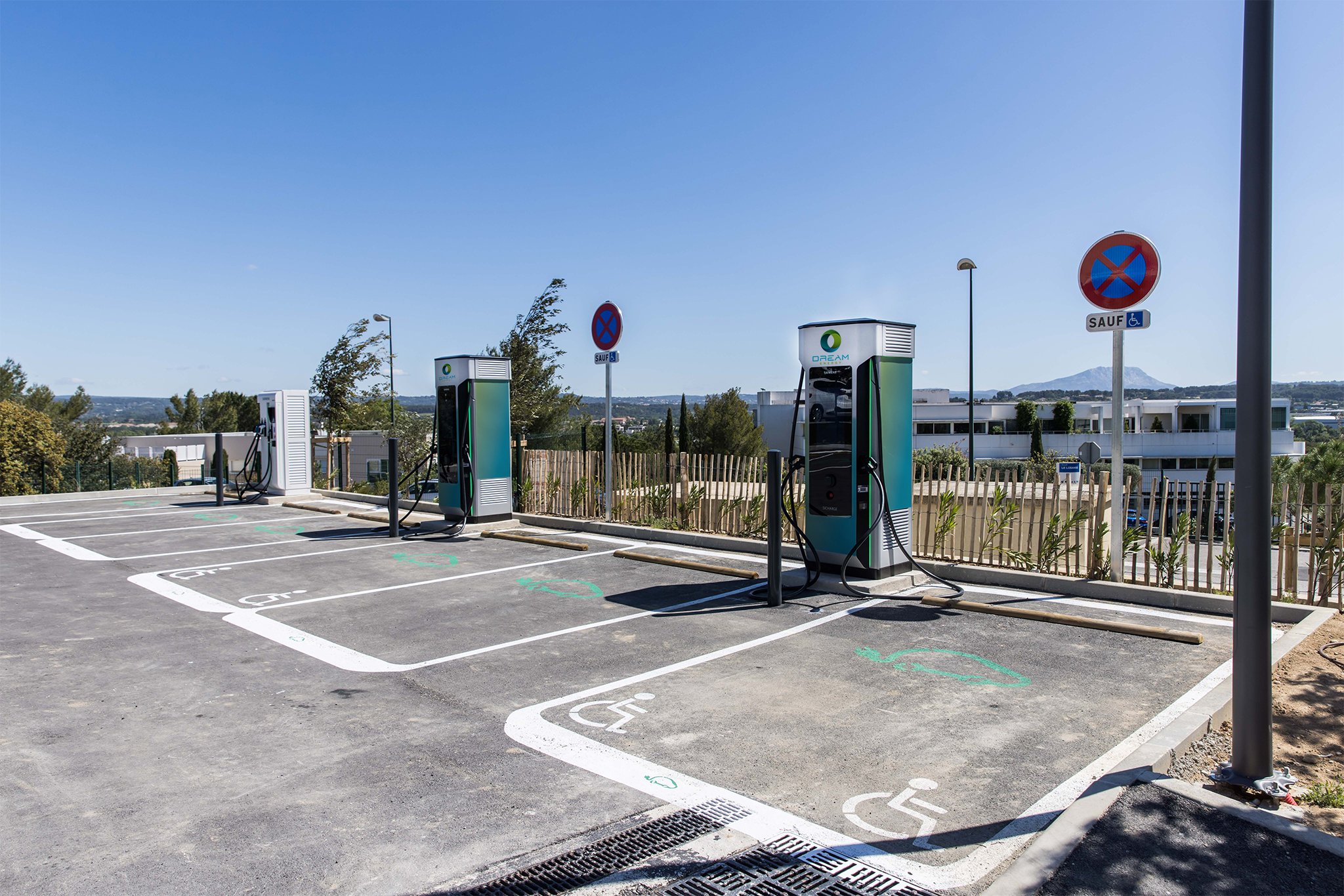
Coordinated multi-site deployment for CPOs and retailers, Enedis grid connection and electrical sizing, NF C 15-100 compliance upgrades for existing fleets, HTA/BT substation installation for DC charging hubs. From technical study to commissioning, a single point of contact.


New Installation
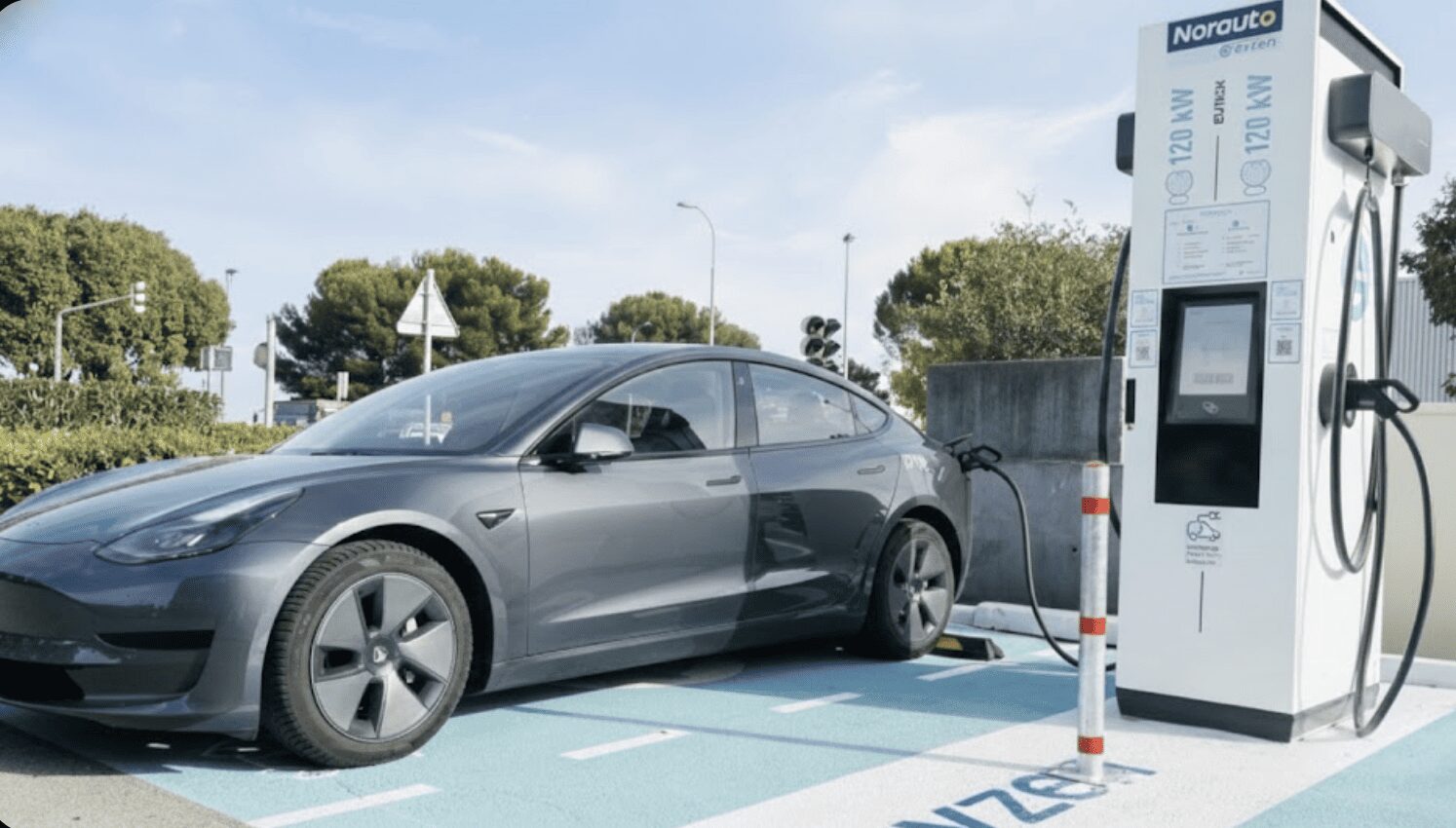
Turnkey deployment of AC and DC chargers, all brands: Enedis grid connection, electrical sizing, civil works, installation and OCPP commissioning. HTA/BT substation installation for high-power DC charging hubs.
- AC chargers (7.4 kW, 22 kW) and DC chargers (50 kW to 350 kW)
- Enedis grid connection and HTA/BT substations
- Coordinated multi-site deployment for CPOs
Compliance Upgrade
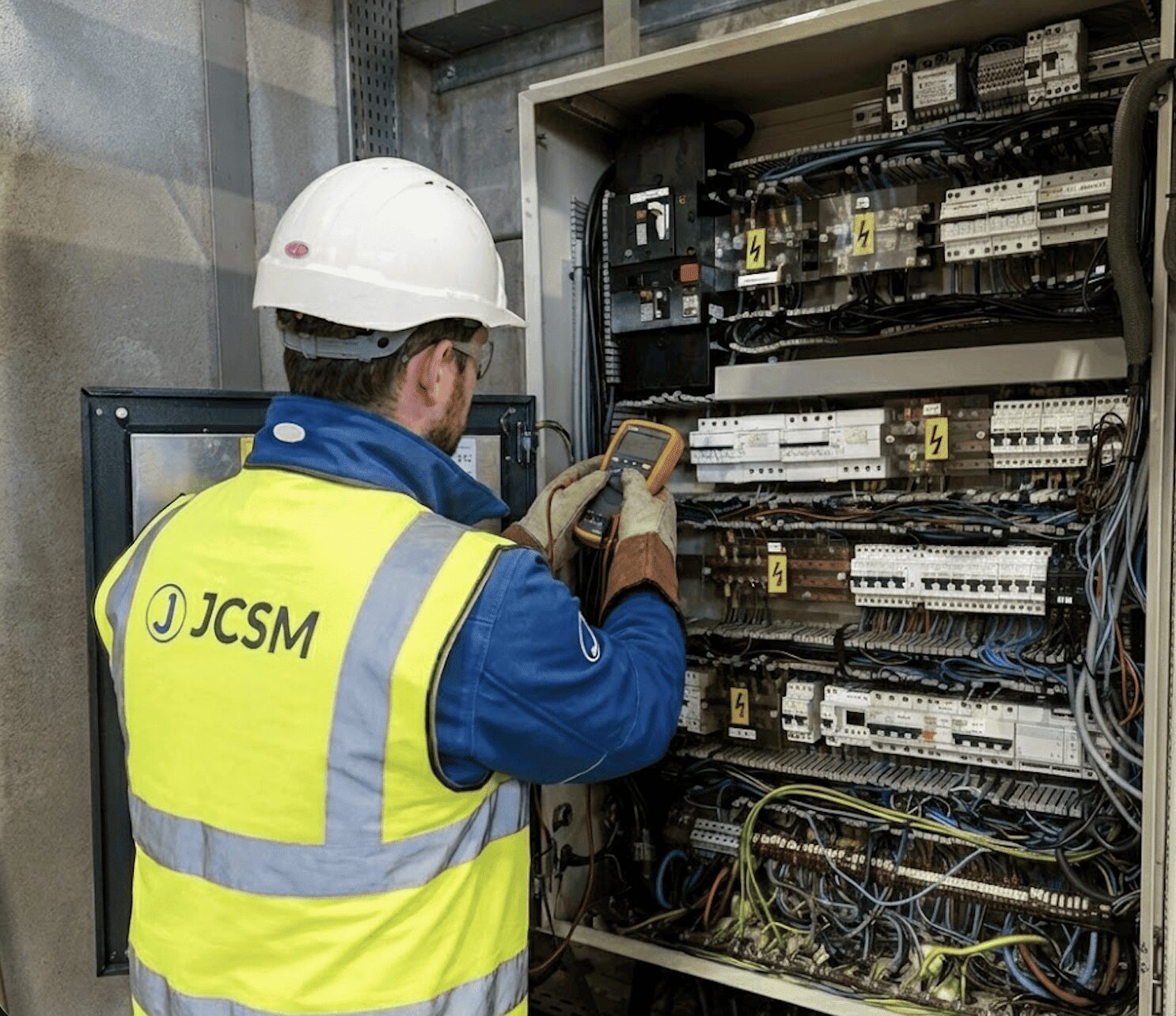
NF C 15-100 compliance upgrades for existing fleets: full electrical sizing diagnostic, replacement of obsolete protections, wiring brought up to standard and Consuel validation. Essential when changing CPO or undergoing a regulatory audit.
- Electrical diagnostic and NF C 15-100 sizing
- Panel, protection and wiring upgrade
- Consuel certificate and compliance report
Car Parks & Shopping Centres
Coordinated multi-site deployment for retailers
Fast Charging Stations
DC chargers 50-350 kW with HTA/BT substation
Corporate Fleets
Enedis sizing and load balancing
Apartments & Hotels
Shared collective infrastructure

Completed installations (since 2019)
Are you a business?
Technical study, Enedis grid connection, electrical sizing, installation and OCPP commissioning: JCSM manages your IRVE project from A to Z. Coordinated multi-site deployment, a single point of contact, controlled timelines.
Request a business quoteResponse within 48 hours · Qualifelec IRVE certified · ADVENIR support
Charge at home, with peace of mind
90% of charging happens at home. AC wallbox 7 to 22 kW, all brands (Wallbox, Hager, Legrand, Schneider, EVBox). Installation in detached houses and apartment buildings by a certified IRVE professional. ADVENIR support for apartment buildings and reduced 5.5% VAT.
Which charger for your home?
Reinforced outlet 3.7 kW
Entry-level solution for occasional use. Slow charging but sufficient if the vehicle is parked overnight.
Wallbox 7.4 kW single-phase
The most common choice for detached houses. Compatible with a standard electricity subscription. Full charge overnight.
Wallbox 11 kW three-phase
The best performance-to-cost ratio for three-phase households. Allows fast evening charging even after a long trip.
Wallbox 22 kW three-phase
Maximum AC power output. Ideal if you need frequent and fast daily charging.
Why choose a certified installer?
Mandatory above 3.7 kW
French law requires a certified IRVE (Qualifelec) installer for any charger exceeding 3.7 kW. It is also a prerequisite to qualify for financial incentives.
Electrical diagnostic included
We check the electrical panel, grid connection and sizing before any installation. Appropriate residual-current protection and cable sizing.
Financial incentives in 2026
Reduced 5.5% VAT for installing and maintaining a charger in a home, for its residents (French Tax Code, art. 278-0 bis, N). The ADVENIR programme funds chargers in apartment buildings (50%, up to EUR 1,000 excl. VAT per point for an individual solution, per its grid checked on 23 October 2026). JCSM guides you through the ADVENIR application and checks your eligibility before work starts.
NF C 15-100 standard, part 7-722
Installation compliant with current electrical standards. Consuel certificate issued on completion for your peace of mind.
Please note: the CIBRE tax credit (EUR 500 per charger) expired on 31 December 2025 and has not been renewed (French Tax Code, art. 200 quater C, accessed 23 October 2026). The 5.5% VAT rate remains the main tax benefit in 2026.
Are you a homeowner?
JCSM installs your AC wallbox 7 to 22 kW at home, all brands (Wallbox, Hager, Legrand, Schneider). Detached house or apartment building, free diagnostic, certified IRVE installation and same-day commissioning.
Request a quoteQuote within 48 hours - Installation within 2 weeks
From audit to commissioning.
Three steps for an IRVE installation compliant from day one.
Site diagnostic, sizing of available power and electrical feasibility study.
Charger mounting, cabling, electrical connection and NF C 15-100 compliance.
OCPP configuration, load testing and acceptance report.
Navigating French and European electrical standards
EV charging installations must comply with a complex web of national and EU regulations. Our team masters every standard that applies to your project, whether in France or Belgium.
French electrical standards
Mandatory for all installations in mainland France
NF C 15-100
The foundational French standard for low-voltage electrical installations. It governs cable sizing, protection devices, earthing systems and circuit separation. Every EV charger installation must comply with Section 722, which specifically addresses EV charging supply circuits.
NF C 15-100, part 7-722
The part of NF C 15-100 dedicated to EV charging installations, replacing the former UTE C 15-722 guide. It details the requirements for dedicated circuits, type A or B RCDs, overcurrent protection and load management systems for multi-point installations.
NF C 14-100
Governs the connection between the public distribution network and the customer's installation. Relevant when upgrading grid connections for high-power DC charging stations or multi-point commercial deployments.
Belgian electrical standards (RGIE/AREI)
Mandatory for all installations in Belgium
RGIE (General Regulations on Electrical Installations)
Belgium's equivalent of NF C 15-100. The 2020 revision introduced specific provisions for EV charging: dedicated circuits, appropriate RCD protection and load management requirements for shared parking installations.
Inspection body certification
Unlike France's Consuel system, Belgian installations must be inspected by an accredited inspection body (organisme agree) before energisation. JCSM prepares the complete dossier and coordinates the inspection for a first-pass approval.
Regional subsidy compliance
Wallonia, Flanders and Brussels each have distinct subsidy schemes for EV charging infrastructure. Our team handles the administrative requirements to ensure your installation qualifies for available incentives.
EU harmonised standards for EV charging equipment
EV charging systems
The core European standard defining charging modes (Mode 1 to 4), communication protocols between vehicle and charger, and safety requirements. All JCSM installations comply with EN 61851-1 (general requirements) and EN 61851-21 (EMC).
Plugs & connectors
Defines Type 2 (AC) and CCS Combo 2 (DC) connectors mandated across Europe. We verify connector compatibility, locking mechanisms and contact resistance during every commissioning.
Infrastructure requirements
The Alternative Fuels Infrastructure Regulation mandates minimum charging coverage along TEN-T corridors. JCSM helps operators meet AFIR deployment targets with compliant, high-availability installations.
Plug & Charge
The standard enabling automatic authentication between vehicle and charger via TLS certificates. Our OCPP 2.0.1 expertise ensures your infrastructure is ready for Plug & Charge as adoption grows.
The Consuel certification process, demystified
In France, every new or significantly modified electrical installation requires a Consuel (Comite National pour la Securite des Usagers de l'Electricite) attestation before the grid operator will energise it. For EV charging projects, this can be a bottleneck if the dossier is incomplete or the installation has non-conformities.
JCSM handles the entire Consuel process end-to-end:
Pre-installation audit
We verify electrical panel capacity, earthing and cable routes before any work begins.
Standards-compliant installation
Installation performed by Qualifelec IRVE-certified technicians with full documentation.
Consuel dossier preparation
We prepare and submit the attestation de conformite with all required documentation.
Inspection and validation
We coordinate the Consuel inspection visit and handle any follow-up items.
HTA/BT electrical infrastructure
High-power DC charging stations (150 kW and above) often require dedicated high-voltage (HTA) to low-voltage (BT) transformer substations. This adds significant complexity to the electrical design and regulatory process.
Transformer sizing and specification
We calculate the required transformer capacity based on simultaneous charging demand, future expansion plans and grid constraints. Typical installations range from 250 kVA to 2 MVA.
Grid connection coordination
We manage the connection request with Enedis (France) or the local DSO (Belgium), including the technical study, PTF validation and connection scheduling.
HTA cell installation and commissioning
Installation and testing of HTA switchgear, transformer and BT distribution panels. Full electrical measurements and protection relay configuration.
Ongoing transformer maintenance
Preventive maintenance contracts for HTA/BT transformers: oil analysis, thermographic inspections, protection testing and regulatory compliance checks.
All brands, all power ratings
We install and bring into compliance EV chargers from the market's leading manufacturers, both AC and DC.
Frequently asked questions
What certifications do you hold for EV charger installation?
JCSM is Qualifelec IRVE certified (IRVE P1-P2-P3) and our technicians hold B2V/BR/BC qualifications. We comply with NF C 15-100 (including part 7-722, specific to EV charging stations) and NF C 14-100.
What is the difference between AC and DC charging?
AC chargers (alternating current, 3.7 to 22 kW) are suited for slow or accelerated charging in long-stay parking areas. DC chargers (direct current, 50 to 350 kW) offer rapid charging in 20 to 40 minutes, ideal for highway stations or commercial fleets.
How long does charger installation take?
Installing a single AC charger takes 1 to 2 days. For multi-point deployments (car parks, apartment buildings, stations), allow 1 to 4 weeks depending on the complexity of electrical connections and civil engineering work required.
What is an IRVE compliance upgrade?
A compliance upgrade brings an existing installation up to current standards: verifying electrical sizing, replacing obsolete protections, upgrading wiring and validation by an approved inspection body (Consuel).
Can you install a home EV charger?
Yes. JCSM installs EV chargers (wallbox 7 to 22 kW) for homeowners in detached houses or apartment buildings. Installation by a certified IRVE professional is mandatory above 3.7 kW and qualifies for the reduced 5.5% VAT rate. Learn more about residential installation.
We plug in. You sleep soundly.
Get a detailed quote for your IRVE installation or compliance upgrade project.
Further reading
Installing a home EV charger: the complete guide
Everything you need to know about installing an EV charger at home, from charger choice to financial incentives.
ReadInstalling EV chargers in apartment buildings: the complete guide
How to deploy EV charging in shared parking, from the collective vote to the right to a socket.
ReadAC vs DC chargers: what's the difference and how to choose?
Understand the difference between AC and DC charging to pick the right charger for your use case.
Read